


The Hidden Link Between Classroom Doors and Cocoa Yields.
When we talk about sustainable agriculture, the conversation typically turns to soil health, pest management, or climate-resilient farming techniques. But there’s a critical factor that rarely makes it into sustainability reports: the education of the next generation in farming communities.
At SafeCrop Ltd, we’ve learned something from working directly with cocoa-growing communities – sustainability doesn’t grow in the soil; it grows in the minds of children who will inherit these farms.
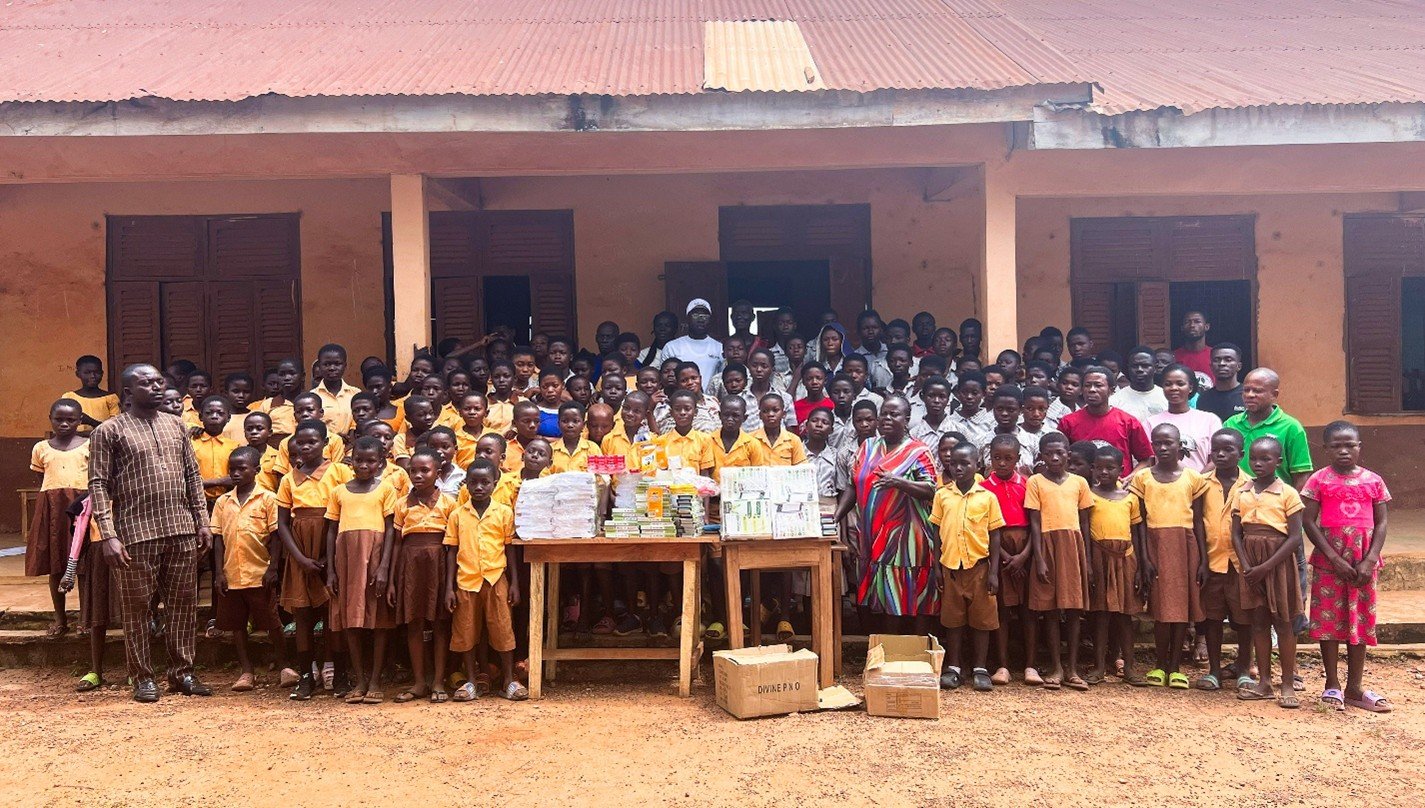
This September, through our flagship social impact initiative 1000 RootED, we reached 1,045 students across 14 communities in our “Back to School” project. But this isn’t just a story about distributing school supplies. It’s about recognizing that the future of sustainable agriculture depends on the educational opportunities we provide today.
The Research is Clear: Education Powers Sustainable Agriculture
The connection between education and agricultural sustainability isn’t just anecdotal, it is backed by compelling research. Maini et al., (2021)’s research published in the journal Sustainability found that the highest level of education within farming families has the largest impact on the transition toward sustainable agricultural practices. The research emphasizes that family-level education – not just the farm manager’s education – serves as a crucial mediator in strategic decision-making for sustainable farming.
More strikingly, research from the International Cocoa Initiative, together with other published papers, found a strong correlation between higher quality education and lower prevalence of child labour, with communities having the highest quality education showing child labour prevalence at 10% to 66% lower than communities with the lowest quality education.
Specifically in the cocoa sector, limited education perpetuates intergenerational poverty. Households with uneducated heads are more likely to be poor. This creates a vicious cycle in which poverty leads to educational barriers that reinforce poverty for the next generation. The data confirms what we observe daily: investing in education is essential to agricultural sustainability.
The Reality Behind the Statistics
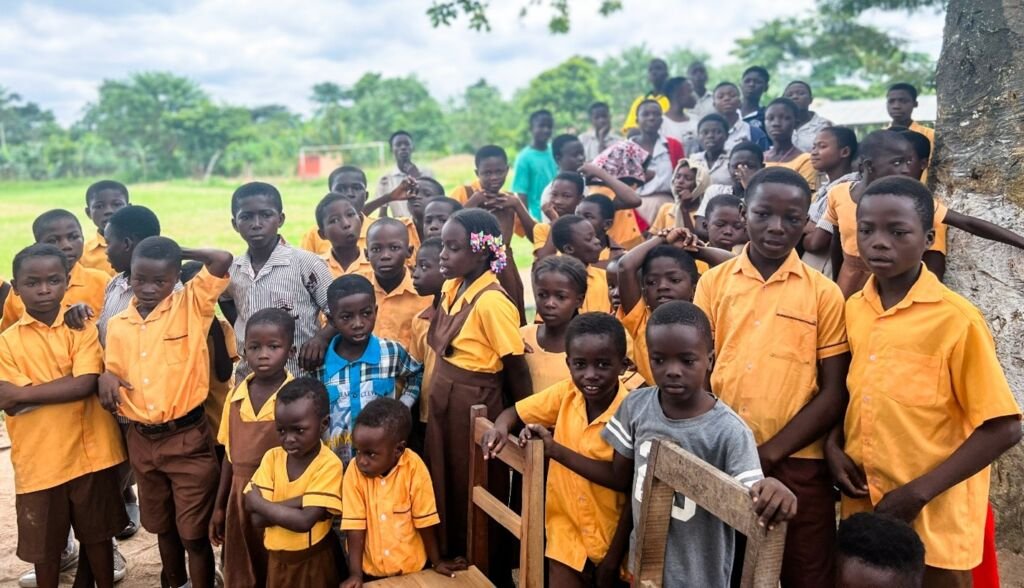
Here’s what we observed in one of our partner communities in the Ahafo-Ano District, Ghana’s cocoa belt.
Memunatu Mohammed, a cocoa farmers and mother from Pokuakura, wakes up at 4:30 AM to begin her day. Her children do too. During school resumptions, instead of preparing for school, the family worry about whether they can afford the cost of textbooks, uniforms, and supplies for the new term, even with the free education in place.
Despite the abolishment of school fees, expenses such as textbooks and other materials remain a financial barrier for poor families. For families like Memunatu’s, which earns an approximate $0.40-$0.45 per capita daily from cocoa farming, these “small” expenses are insurmountable.
Long distances to school, school-related costs, inadequate school infrastructure, quality of teaching, and availability of teachers can affect levels of attendance. In cocoa-growing areas, children face the realities of rural poverty such as scarcity of land, food insecurity, limited access to quality education, lack of access to drinking water and inadequate health services. This is the context in which SafeCrop operates, and it’s why we believe community partnership, not just corporate intervention, is the path forward.

Why Community Partnership Matters
Traditional corporate social responsibility in agricultural supply chains often follows a top-down model: corporations identify problems and implement solutions. But sustainable change requires something different.
Research on community-driven agricultural initiatives shows that by involving local farmers in decision-making processes, these initiatives cultivate a sense of ownership and responsibility towards agricultural practices. This grassroots approach empowers individuals and groups within communities, creating lasting change rather than dependency.
Our 1000 RootED initiative will leverage on this philosophy. We don’t just write checks for school supplies. We:
- Partner with local leaders and cooperatives to identify which communities and children need support most urgently.
- Collaborate with schools to understand specific challenges as well as understand our role in mitigation.
- Engage parents and community members in distribution events that become celebrations of hope and shared commitment to children’s futures.
- Build sustainable systems where our field officers maintain ongoing relationships with communities, ensuring accountability and adapting our approach based on feedback.
This is more than philanthropy; it’s an integrated approach that recognizes education as essential infrastructure for agricultural sustainability.
Stay tuned for our next update why we believe investing in education is at the core of the cocoa business, and data from our back-to-school initiative.
References:
Maini, E., De Rosa, M., & Vecchio, Y. (2021). The Role of Education in the Transition towards Sustainable Agriculture: A Family Farm Learning Perspective. Sustainability, 13(14), 8099. https://doi.org/10.3390/su13148099
International Cocoa Initiative (Retrieved, 2025). How quality education can tackle child labour. https://www.cocoainitiative.org/issues/tackling-child-labour/quality-education
International Cocoa Initiative (Retrieved, 2025) Cocoa farmers in Ghana experience poverty and economic vulnerability. https://www.cocoainitiative.org/news/cocoa-farmers-ghana-experience-poverty-and-economic-vulnerability
O. Olaigbe & I. K. Usman (January, 2025). Ghana Is the Second Largest Cocoa Producer; Why Are Its Farmers Still Poor? Pulitzer Center. https://pulitzercenter.org/stories/ghana-second-largest-cocoa-producer-why-are-its-farmers-still-poor
